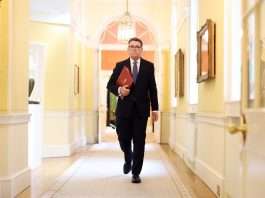
The value of the pound continued its downward slide on Wednesday, as investors reacted to a turbulent session in the House of Commons, where Chancellor Rachel Reeves became visibly emotional during Prime Minister’s Questions.
Sterling dropped nearly 1 percent during the day’s trading, one of the sharpest single-day moves since the mini-Budget crisis.
The Chancellor was seen wiping away tears while seated behind the Prime Minister, sparking a wave of speculation over her political future and sending tremors through financial markets.
The sell-off in sterling was compounded by an initial failure by Starmer to publicly back Reeves when challenged at the despatch box. Although he later reaffirmed her position in a BBC interview, market sentiment remained fragile.
In early trading, the pound was last down around 0.1 percent against the US dollar at $1.364, and 0.2 percent lower against the euro, which was trading at 86.5p. Meanwhile, UK government borrowing costs surged, with gilt yields climbing sharply — a signal that investors are demanding higher returns to hold British debt amid perceived political instability.
The sharp movement in both currency and bond markets reignited comparisons with the volatility seen during former Prime Minister Liz Truss’s brief tenure, when her government’s unfunded tax-cut plans triggered a market rout.
Addressing the Chancellor’s emotional display and ensuing speculation, Starmer told the BBC:
“It was a personal matter for the Chancellor and I’ve been absolutely clear with you — it has got nothing to do with politics, nothing to do with any discussion between me and Rachel, nothing to do with the matters of this week.
She will be the Chancellor for a very long time to come. She is going to be the Chancellor into the next election and for many years afterwards.”
Despite the Prime Minister’s reassurance, some analysts warned that the episode could continue to weigh on investor confidence unless the government delivers a clearer and more unified economic message in the coming days.
“Markets don’t like ambiguity — especially around top fiscal roles,” said one City economist. “Even if the Prime Minister’s support is now explicit, the hesitation earlier in the day has already left a mark.”
“It’s obvious things are not happy behind the scenes,” said James Wight, a city market analyst. “The optics were poor, the PM’s hesitation was telling, and the markets have responded accordingly. It wouldn’t surprise me at all if she’s gone soon.”