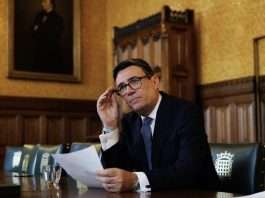
The jewel, and the raid
John Healey called Britain’s banks “a part of the jewel … in the British economic crown” on Thursday morning. By the afternoon, the City was braced for a tax raid.
Speaking in Bangkok, where the Chancellor is attending the annual meeting of the International Monetary Fund, Mr Healey told reporters that banks were “hardwired into the economic fabric of this country and our future prospects.” It was praise framed as reassurance. “That said, I’ve got decisions to take in the budget and I will,” he added, insisting the remark was not a steer on tax. Reuters recorded both the praise and the caveat.
Within hours, the Guardian reported that the Chancellor was poised to tax lenders in his first Budget on 28 October, reversing a cut to the bank surcharge made by the former Conservative chancellor Jeremy Hunt. No decision has been announced. If it goes ahead, it would be the first increase in bank-specific taxation since Labour took office, and it would land on an industry Mr Healey spent the morning describing as central to Britain’s growth.
What Healey is planning
The bank surcharge is a tax on bank profits above £100m, levied on top of corporation tax. Reuters reports that Mr Hunt cut the rate from 8pc to 3pc, and that it now raises a little over £1bn a year.
Mr Healey is understood to be considering restoring it to 8pc. Unions and Labour figures, including Angela Rayner, have argued that this could raise around £2bn for the Treasury, according to The Telegraph. That figure is an annual, gross estimate of additional receipts advanced by the measure’s advocates; it has not been independently certified by the Treasury or the Office for Budget Responsibility, and it does not model how banks might respond. The TUC has put the yield at £2.25bn a year and pushed for a far steeper rise, to 16pc, which it says would raise £24bn over four years. The Green Party has called for a 38pc windfall tax to fund tax cuts for small businesses.
The £2bn claim, and the £20bn warning
Banks dispute the arithmetic. In a letter sent to Mr Healey on Monday, UK Finance said that raising the surcharge to 8pc would forgo “around £6bn of UK output” over the five-year Budget forecast period, “rising to nearly £20bn over 10 years.” The Telegraph obtained the letter.
Those figures are UK Finance’s own forecasts, produced for the industry, and they measure lost economic output rather than lost tax revenue. They are not interchangeable with the £2bn of additional annual receipts the Treasury might collect, nor with any eventual cost to households, savers and businesses. The distinction matters: a reduction in national output and an increase in the tax take are different quantities, and neither figure is an established outcome.
David Postings, the trade body’s chief executive, wrote: “A near-term increase in tax revenue could come at the expense of the lending and investment needed to reindustrialise the economy and drive growth across the UK.” The letter is reported in full by Sky News.
UK Finance has already told the Chancellor that banks’ total UK tax rate of 46.6pc is “already materially higher than our international competitors.” Its own 2025 Total Tax Contribution study, produced by PwC, puts the UK’s total tax rate for a model corporate and investment bank at 46.4pc, against New York at 27.9pc, Dublin at 28.9pc, Frankfurt at 38.9pc and Amsterdam at 42.2pc. Sky News reported the body’s claim that the sector paid more than £43bn in tax in the year to March 2025, equivalent to 4.3pc of all receipts. That is a Total Tax Contribution figure, drawn from a PwC study commissioned by UK Finance, which counts both the taxes banks bear and the taxes they collect on the Government’s behalf. It sits alongside, rather than contradicts, HMRC’s published banking-sector receipts of £39.1bn for 2025/26, which cover payroll income tax and National Insurance, corporation tax, the bank levy and the bank surcharge. The two sets of figures use different definitions and cover different periods.
The four largest lenders, HSBC, NatWest, Barclays and Lloyds Banking Group, have generated more than £200bn in pre-tax profits over the past five years, the Financial Times and the Guardian report. Those are global group figures, covering worldwide operations including HSBC’s and Barclays’ international businesses, not profits earned solely in Britain.
What the banks say in private
Executives are blunter away from the cameras. One senior figure at a major British bank told The Telegraph that a bank tax carries “a longer burn impact than National Insurance” and “is about international investability in Britain.” Another said: “What happens if banks face higher costs? They’ll just pass those costs on.”
The warning reaches beyond London. In May, JP Morgan’s chief executive, Jamie Dimon, said he could scrap plans for a new £3bn London headquarters if the government turned hostile towards banks. The Guardian also reports that specialist lenders Revolut and Shawbrook have asked the Treasury to raise the £100m profit threshold at which the surcharge bites, to £500m.
A tax cut the Chancellor may reverse
The reduction to 3pc took effect in April 2023 as part of a wider reform of corporation tax, not as a stand-alone concession to banks. The main rate of corporation tax rose from 19pc to 25pc that April, and the surcharge rate was cut from 8pc to 3pc at the same time, which raised the combined headline rate on qualifying banking profits from 27pc to 28pc. The profit allowance below which the surcharge does not bite was raised from £25m to £100m. As the Treasury set out at the time, the change was intended to keep the sector’s contribution “at a sustainable level” while preserving the UK’s ability to “attract and retain internationally-mobile business and jobs.”
The politics of the surcharge remain awkward. Mr Hunt cut it to 3pc because ministers feared it was driving activity abroad. Mr Healey’s predecessor, Rachel Reeves, considered raising it in her 2025 Budget and decided against it, wary of deterring investment, and bank bosses narrowly escaped higher levies that autumn. Reuters reported that Ms Reeves’ 2025 Budget, like her first a year earlier, left bank-specific taxes untouched. If Mr Healey proceeds, it would be the first increase of its kind since Labour took office in July 2024.
The £35bn problem behind the raid
The bank raid is a symptom of a wider problem. The Institute for Fiscal Studies has warned that Mr Healey faces finding £35bn if he wants to lift defence spending to 3pc of national income by 2030 while protecting other departments from cuts. That is a scenario the IFS sets out to show the scale of the choice, not a prediction of what the Chancellor will do.
Its director, Helen Miller, said a “steady-as-she-goes” Budget “is not an option available to the chancellor.” Inflation caused by the war in Iran is “blowing departments’ spending plans off course,” and pencilling in implicit cuts the Chancellor does not intend to deliver “would make the Budget a work of fiction.”
Thursday’s figures underlined the squeeze. The economy grew by just 0.1pc in August, down from 0.4pc in July, and consumer-facing services shrank by 0.3pc as energy and fuel costs bit into household budgets. The Office for National Statistics confirmed the monthly slowdown. The headline figure was carried by manufacturing and by investment linked to the artificial intelligence build-out, while construction fell 0.2pc.
Borrowing costs and a shrinking buffer
The backdrop is a bond market that has already priced in trouble. Yields on 20- and 30-year gilts rose to their highest level since 1998 in early October, with the 30-year gilt briefly topping 6pc on 1 October, the first time it had done so since January 1998, while the 10-year yield reached its highest since July 2007. Reuters and the Guardian reported the moves. UK government borrowing costs are higher than in any other major advanced economy.
The IMF has warned that Britain is nearing peak taxation, with “limited space” to raise taxes further, and that the UK faces “economic realities” that leave little room for further tax rises or borrowing. The Telegraph reported the IMF’s assessment. Mr Healey is expected to run down some of the £24bn headroom his predecessor built at the Spring Statement, with the IFS expecting a buffer closer to £20bn. Some analysts believe climbing borrowing costs could halve the cushion.
Belts tightened, and relief promised
The Chancellor has been explicit that the squeeze will be shared, telling reporters that departments must “manage within what they’ve got” and that “you have to reprioritise if you want to do fresh things or more of the same.”
That message has already reached the Health Secretary. Andy Burnham rejected a plea from Yvette Cooper for hundreds of millions of pounds for a nurses’ pay deal, telling her to find the money from the NHS’s existing budget. The Budget is nonetheless expected to promise fresh energy support for households and tax cuts for high-street businesses.
Mr Healey defended the Government’s record on the cost of living by pointing to the VAT cut on energy bills. “It doesn’t remove the cost pressure,” he said. “It recognises those pressures and says, look, where we can, we’re a government that will act to try and give people a bit of breathing space.”
Where the political blame lies
The Conservative leadership opposes the raid. The shadow chancellor, Andrew Griffith, said: “Britain needs growth. But a raid on the financial services sector will stifle it. Labour should be backing businesses and wealth-creators, not making their lives even harder. Rather than hiking taxes yet again, Labour should cut spending.”
The Conservative leader, Kemi Badenoch, used a visit to a financial services firm in Edinburgh on Thursday to warn that the sector already faced a higher effective tax rate than in many rival centres.
Labour’s union allies want the opposite. The TUC’s general secretary, Paul Nowak, said the big four banks were “making a billion pounds a week, while bonuses have hit a post-crash record,” adding that “it’s time to make sure banks pay their fair share.”
Great British PAC’s view
Great British PAC believes the test of a Budget is not what a Chancellor says about growth but what his decisions do to it. Mr Healey has spent months telling the public that Britain must live within its means. The proposed bank tax increase points the other way: rather than demonstrating how spending restraint could address the fiscal pressures, the Treasury is considering another tax rise on a sector the Chancellor himself describes as central to Britain’s economic growth.
The Government has yet to demonstrate that the short-term revenue expected from a higher bank surcharge would outweigh the potential longer-term consequences for investment, lending and economic growth. The IMF has warned that Britain has little room left to tax or borrow. The IFS says the Chancellor is short by £35bn and that pencilling in cuts he does not intend to deliver would make his Budget a work of fiction. UK Finance forecasts that the surcharge would forgo up to £20bn of economic output over a decade. Banks warn that higher taxes could feed through into the cost of lending, potentially affecting the families and small businesses the Chancellor says he wants to help.
Official Great British PAC Reaction
Claire Bullivant, Chief Executive Officer of Great British PAC, said:
“Labour seems utterly incapable of understanding one of the most basic principles of economics: businesses do not exist in a vacuum, and taxes do not magically disappear into corporate balance sheets.
“When Labour taxes banks, it is ordinary people who risk paying the price through higher borrowing costs, poorer returns for savers, reduced investment and fewer opportunities for British businesses.
“As Lord Hannan rightly points out, buildings, cars and banks do not pay taxes. Human beings do.
“The sheer hypocrisy is breathtaking. One minute Labour is praising our banks as the crown jewels of the British economy, the next it is sharpening the knives to take another £2 billion from them.
“This is a Government that talks endlessly about growth while seemingly determined to punish the very businesses that create it.
“Labour cannot tax Britain into prosperity. You do not make a country richer by making it more expensive to invest, employ people and do business here.
“And when the consequences of these policies finally hit ordinary families, you can guarantee Labour will blame everyone but itself.
“Britain desperately needs a Government that understands how wealth is created, not one that treats every successful British industry as another cash machine for the Treasury.”
On 28 October the Chancellor must choose between honouring his promise to govern within the fiscal rules and reaching for a raid whose longer-term costs he has not shown he can recover. Great British PAC will be watching which it is.