Ministers have admitted the Government has made no assessment of what rejoining the EU single market or customs union would do to Britain’s economy.
Andy Burnham will set out options for Britain’s future with the EU around the Brussels summit on 20 November. His own Treasury says the work has not been done.
The admission came in written answers published on 9 November. Asked by Liberal Democrat MP Dr Al Pinkerton whether the Treasury had assessed the impact of joining the single market, and separately a customs union, Economic Secretary Lucy Rigby replied: “The Government has not made assessments of the economic impacts of rejoining the EU Customs Union or the EU Single Market.”
The Cabinet Office gave the same answer on a wider question. Conservative MP Mike Wood asked whether the Prime Minister’s office had assessed rejoining the EU, the customs union or the single market, or joining the Schengen area or the euro. Minister Hamish Falconer said the Cabinet Office “has not made assessments” of any of the five.
That matters because of what Mr Burnham has said he will do next. Downing Street has said he will set out “options” for Britain’s long-term relationship with the EU around the UK-EU summit in Brussels on 20 November. The Financial Times has reported that those options are expected to include a customs union, a return to the single market or full membership.
The Prime Minister has not hidden where he would like to end up. Asked on ITV’s Good Morning Britain last month whether he wanted Britain to rejoin, he said: “I’m going to be honest and say, in my lifetime I would like to see that happen, but I am not going to move ahead of the public.”
So the Prime Minister is preparing to put choices on Brexit to the country without, on his own Government’s account to Parliament, having measured what any of them would cost or deliver.
There is a fair answer to that. The FT reported last month that senior Labour and Whitehall figures expected the Treasury to be asked to carry out an impact assessment later this year, and that it had not yet been commissioned. One government official told the paper: “This is exactly what the Treasury is supposed to do.” The Treasury said: “We do not comment on hypothetical future scenarios.”
But Labour is the Government, and the order of events is the problem. The FT reported that any assessment would be commissioned to support Mr Burnham as he sets out his options. Shadow Chancellor Andrew Griffith told the paper the Treasury “must be wary of giving us ‘Project Fear’ in reverse”.
Even the figures ministers already use do not match. In her answers, Ms Rigby repeated the Prime Minister’s claim that the existing reset deals “will add over £10 billion per year to the UK economy by 2040”. On the same day, the Cabinet Office said its latest published estimates were up to £5.1 billion a year from the food and farming (SPS) agreement and £3.8 billion from linking the two carbon markets, a combined figure it put at “up to £9 billion”. The youth mobility scheme, it said, “will be assessed in due course”. All of these are forecasts for 2040, not money in the economy today.
Private estimates are filling the gap. Goldman Sachs told clients in October that single market membership could lift the economy by 2 to 5 per cent, which the Telegraph put at £61bn to £152bn. Such figures are modelled projections, and a growth forecast is not a price.
Single market membership would mean following EU rules Britain has no vote on, alongside free movement. A customs union would mean Brussels setting the tariffs on goods coming into Britain and limit the trade deals Britain could strike for itself. Labour’s 2024 manifesto ruled out a return to the single market or the customs union. Mr Burnham has said that commitment stands for this Parliament, while leaving open a promise to rejoin at the next election.
The questions for the Prime Minister are straightforward. Will the Treasury assessment be published before he sets out his options, or after? Will it count the costs, including rule-taking, budget contributions and the loss of an independent trade policy, as well as the hoped-for gains? And which figure for the existing deals is right, up to £9 billion or more than £10 billion?
The summit is on 20 November. As of 9 November, the Government’s answer to Parliament was that no assessment had been made.
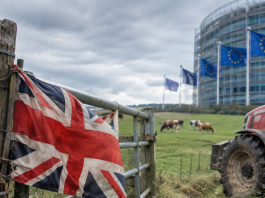
Image: AI-generated editorial illustration (Canva). It does not show a real event, person or place.