Keir Starmer is leaving office in much the same way he governed: making expensive promises today and leaving someone else to work out how to pay for them tomorrow.
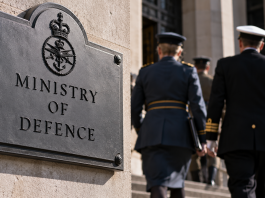
The outgoing Prime Minister finally unveiled his long-delayed Defence Investment Plan (DIP) this week after more than a year of wrangling over funding. Marketed as a major boost for Britain’s armed forces, the package promises an additional £15 billion for defence over the next four years.
But buried within the Treasury’s own figures was an awkward admission: almost a third of the money has not actually been found.
While ministers announced £15 billion of additional spending, only £10.3 billion has been identified. The remaining £4.7 billion will have to be found at a future Budget, leaving Sir Keir’s successor to solve the problem.
That successor is widely expected to be Andy Burnham, who now inherits not only the spending commitment but also the political challenge of deciding whether to find the money, cut the programme, or break promises made by the departing Prime Minister.
In a particularly embarrassing development for Labour, Defence Minister Luke Pollard openly acknowledged that the next Chancellor would have to “find the resources” needed to plug the gap. Reports also suggest Mr Burnham’s team was only informed of the scale of the shortfall when the Treasury published the financial details alongside the announcement.
The episode raises uncomfortable questions about Sir Keir’s claims to fiscal responsibility.
For months ministers delayed publication of the Defence Investment Plan while they searched for funding. The Government repeatedly insisted it was taking defence seriously and that Britain’s security required urgent action. Yet after all the delays, negotiations and political theatre, the final plan arrived without all of the money required to pay for it.
The result is a defence strategy built partly on assumptions and future decisions that Sir Keir himself will never have to make.
The Prime Minister insists the package represents the largest sustained increase in defence spending since the Cold War. However, the headline figures mask a less impressive reality.
Britain will still be spending only around 2.7 per cent of GDP on defence by 2030. Former Defence Secretary John Healey, who resigned amid disagreements over defence spending, has argued that this falls short of what the security situation demands and remains well below the level increasingly expected by NATO allies.
Sir Keir also declined to provide a firm date for reaching 3 per cent of GDP on defence, despite repeated calls from military figures and defence specialists for a clear timetable.
Even funding the current package will come at a cost elsewhere.
Rather than being paid for through economic growth, the Government is raiding investment budgets across Whitehall. Transport, infrastructure and energy projects face reductions, while the Department for Transport and the Department for Energy Security and Net Zero are expected to contribute substantial savings towards the plan.
Road schemes including the A38 Derby Junctions project and the A46 Newark Bypass have reportedly been identified as potential casualties.
At the same time, the Ministry of Defence has been instructed to find more than £10 billion in efficiency savings, while a number of existing programmes have been delayed, reduced or scrapped altogether.
The irony is difficult to ignore. Labour spent years attacking Conservative governments for announcing policies without fully explaining how they would be funded. Yet one of Sir Keir Starmer’s final acts as Prime Minister has been to unveil a defence programme with a multi-billion-pound hole in its finances.
Supporters will argue that Britain’s armed forces urgently need investment and that difficult decisions are inevitable. Critics will counter that if defence truly is the first duty of government, ministers should have identified the money before making the announcement.
Either way, Sir Keir leaves office having committed Britain to billions of pounds of additional spending while leaving his successor to find nearly £5 billion to pay for it.
For a Prime Minister who promised stability, competence and careful stewardship of the public finances, it is a striking final legacy.