The UK markets are in turmoil, with sterling, government bonds, and investor confidence all taking a battering this week – a grim welcome back for Chancellor Rachel Reeves after her much-publicised trip to China.
Pound Plunges to 14-Month Low
Sterling has nosedived to $1.21, marking a 0.8% drop and hitting a 14-month low. This comes just days after Labour touted Reeves’ visit to Beijing as a step towards strengthening Britain’s economic ties. Instead, the markets seem to have taken a very different view, with economists sounding the alarm.
Goldman Sachs has sharply revised its forecast for the pound, predicting it will fall further to $1.20 by year-end – a drastic turnaround from its previous projection of a rise to $1.30.
Gilt Yields Hit Record Highs
It’s not just the pound feeling the pressure. 10-year gilt yields climbed to 4.909% this morning, while 30-year gilt yieldspeaked at a staggering 5.473%—a level not seen in 27 years. Analysts warn that if the 10-year yield breaches the crucial 5% mark, it could spell disaster for Labour’s fiscal strategy.
According to traders, fears are mounting that Reeves will struggle to meet her fiscal rules as borrowing costs continue to spiral. Some are even betting that the pound could lose as much as 8% of its value in the coming months.
Economists Warn of Sterling’s Weakness
The financial community is growing increasingly pessimistic about the UK’s economic outlook. Jamie Niven, a fund manager at Candriam, said the pound’s trajectory looks grim:
“The path of least resistance for the pound would be a fall. On one side, you have very limited pricing in of Bank of England cuts, while the fiscal concerns are also sterling negative.”
Adding fuel to the fire, Deutsche Bank has urged investors to sell the pound, citing worsening market turmoil. Economist Shreyas Gopal warned, “There’s further to go in the recent pound weakness.”
Reeves Faces Mounting Pressure
Reeves’ fiscal rules, already under strain, are now in jeopardy as borrowing costs skyrocket. Labour will be watching the markets nervously, with sources suggesting the Treasury is trying to hold out until March before making any major policy shifts.
But with investor confidence eroding and market sentiment deteriorating, Reeves faces a daunting challenge to stabilise the economy. Any misstep could plunge the UK into deeper financial trouble, and the clock is ticking.
As borrowing costs climb and the pound continues its freefall, pressure is mounting on Rachel Reeves, with calls for her resignation growing louder. Today, Keir Starmer was asked a straightforward question: would Reeves remain Chancellor at the next election? Not once, but twice, Starmer dodged the opportunity to provide a clear answer.
For now, all eyes are on the pound, as Britain braces itself for more economic uncertainty under Labour’s watch.
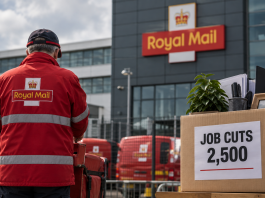
Main Image: For illustration purposes only. Image generated by Grok.