The message from the United Nations is unmistakable. A deal that excludes an entire people from their ancestral home and denies them justice for decades of suffering is not a solution. Ratifying this agreement would not close the chapter on colonial injustice in the Chagos Archipelago, it would lock it in for another century.
The United Nations’ leading anti racism body has issued an unequivocal condemnation of a proposed bilateral agreement between the United Kingdom and Mauritius over the Chagos Archipelago, warning that the deal would entrench, rather than repair, one of the most serious and enduring injustices of the decolonisation era.
In language that leaves little room for interpretation, the UN Committee on the Elimination of Racial Discrimination, CERD, has called on both governments to suspend ratification immediately, stating that the agreement would perpetuate grave violations of the Chagossian people’s fundamental rights.
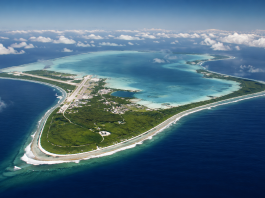
The Chagos Archipelago, a strategically located group of islands in the Indian Ocean, was unlawfully detached from Mauritius by the United Kingdom in 1965, during the final stages of Mauritius’s decolonisation. In the years that followed, the Chagossian people, an ethnic community of African and South Asian descent with a distinct cultural identity and centuries long connection to the islands, were forcibly removed from their homeland. Entire families were expelled to make way for a joint United States United Kingdom military base on Diego Garcia, the largest island in the archipelago. Many were left in poverty and exile, their displacement never remedied.
Despite decades of advocacy, litigation and international concern, the situation remains unresolved. In February 2019, the International Court of Justice delivered a landmark Advisory Opinion, finding that the separation of the Chagos Archipelago from Mauritius violated the Chagossian people’s right to self determination and that the United Kingdom was obliged to end its administration of the territory as rapidly as possible. The UN General Assembly subsequently endorsed this finding and demanded the completion of the decolonisation process and the return of the islands to Mauritius.
It is against this clear legal and moral backdrop that the new bilateral agreement, signed on 22 May 2025, must be judged. Although presented by London and Port Louis as a step toward implementing the ICJ Opinion and the General Assembly resolution, CERD has warned that the agreement in fact undermines both. While the deal formally transfers sovereignty over the archipelago to Mauritius, it simultaneously allows Mauritius to lease Diego Garcia back to the United Kingdom for 99 years, with the possibility of a further 40 year extension. For the Committee, this provision is not a technical detail but a fundamental betrayal of the Chagossian people’s rights.
The Committee expressed deep alarm that the agreement explicitly prevents the return of the Chagossian people to their ancestral lands on Diego Garcia, the very island from which they were violently expelled. Although the agreement permits Mauritius to pursue a limited resettlement programme on other islands in the archipelago, CERD made clear that this does not remedy the core violation. Denying return to Diego Garcia, it said, blocks the Chagossian people from exercising their cultural rights and from preserving and transmitting their cultural heritage, which is inseparable from that land.
Such restrictions, the Committee warned, are flatly inconsistent with the UN General Assembly resolution, particularly its demand that the resettlement of Chagossian people in the Chagos Archipelago be facilitated without any impediment or obstacle. An agreement that permanently excludes them from their principal island, CERD stressed, cannot credibly be described as implementing international law.
The Committee also raised serious concern over reports that the Chagossian people were not adequately consulted during the negotiation and drafting of the agreement. The lack of free, prior and informed consent, it said, directly affects their rights to land, culture and self determination, and fundamentally undermines the legitimacy of the entire process. Decisions taken about Chagossian lands and futures, without the meaningful participation of the Chagossians themselves, amount to a continuation of the very colonial practices the agreement claims to end.
Equally damning was the Committee’s assessment of the agreement’s failure to address reparations. CERD noted that the deal does not provide for full reparation for the harms suffered by the Chagossian people, including restitution, compensation, rehabilitation, satisfaction or guarantees of non repetition. Nor does it include any formal acknowledgment of the grave injustices inflicted through forced displacement, prolonged exile and decades of denial of basic rights.
Invoking its early warning and urgent action procedures, the Committee issued a clear and uncompromising call to action. It urged both Mauritius and the United Kingdom to suspend ratification of the agreement and to engage immediately in renewed dialogue that genuinely centres the Chagossian people. Any lawful and legitimate settlement, CERD insisted, must ensure the free, prior and informed consent of the Chagossians, respect their right to return to Diego Garcia, uphold their right to self determination through meaningful participation in all decision making processes, and guarantee access to effective remedies and full reparation.
The Committee further reminded both governments of their binding obligations under the International Convention on the Elimination of All Forms of Racial Discrimination, the International Covenant on Civil and Political Rights and the International Covenant on Economic, Social and Cultural Rights. It urged them to work toward ending, rather than institutionalising, the harms and violations endured by the Chagossian people.
The message from the United Nations is unmistakable. A deal that preserves military control over stolen land, excludes an entire people from their ancestral home and denies them justice for decades of suffering is not a solution. Ratifying this agreement would not close the chapter on colonial injustice in the Chagos Archipelago, it would lock it in for another century.
READ THE FULL UNITED NATIONS PRESS RELEASE HERE: https://www.ohchr.org/en/press-releases/2025/12/uk-and-mauritius-chagos-agreement-raises-concerns-over-chagossian-peoples