


President Donald Trump is being urged to intervene to halt Britain’s proposed handover of the Chagos Islands, amid mounting warnings that the deal could damage Western defence, undermine environmental protections and saddle UK taxpayers with a long-term financial burden worth more than £500 per person.
The intervention comes as the House of Lords has delayed Labour’s Chagos legislation, opening a narrow window in which the United States could raise concerns before the agreement is ratified by Parliament.
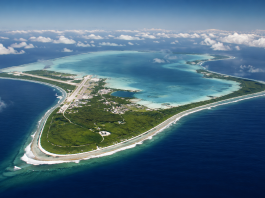
Defence experts and parliamentarians on both sides of the Atlantic argue that the transfer of sovereignty over the British Indian Ocean Territory to Mauritius risks weakening the strategic position of the US-UK military base on Diego Garcia.
The proposed deal would see Britain give up sovereignty over the archipelago while paying Mauritius an estimated £34–35 billion over 99 years to lease back Diego Garcia. Spread across the UK population, the cost equates to more than £500 per person, a figure critics say highlights the scale of the commitment at a time of domestic economic pressure.
Mr Trump, whose mother was born in Scotland, has long emphasised his attachment to Britain and the transatlantic alliance. Sources close to Washington say he has been re-briefed in recent days on the implications of the Chagos deal for Western defence, particularly in light of growing competition with China and instability in the Middle East.
The issue has returned to the political spotlight after a forceful intervention in the Telegraph this week by US conservative commentators, among them Nile Gardiner, a former aide to Margaret Thatcher, who cautioned that the proposed agreement could grant China a strategic foothold in the Indian Ocean and jeopardise the future of the Diego Garcia base. The article argues that the deal represents one of the most serious acts of strategic self-harm by a British government in the post-war era and called on Mr Trump to press for an urgent review before ratification.
Diego Garcia has played a central role in recent US and allied operations, including missions linked to Iran’s nuclear programme, and is regarded as a cornerstone of Indo-Pacific security. Critics of the treaty argue that transferring sovereignty to Mauritius, a country more than 1,000 miles away with limited maritime capability, introduces long-term uncertainty over access, basing rights and operational freedom.
Environmental concerns have also featured prominently in the debate. The Chagos Archipelago comprises 60 islands, 59 of which are uninhabited except for wildlife. Under British administration, the territory has been protected as a vast marine reserve, with some of the healthiest coral reefs and fish populations in the world. Conservationists warn that these protections could be weakened if responsibility passes to Mauritius, which would face significant practical challenges policing such a remote area.
Security anxieties have been compounded by recent international developments. Mauritius has been linked in reports to illicit financial networks connected to Venezuela’s Maduro regime, while leaked documents cited by campaigners suggest China has shown strategic interest in the region beyond the 99-year lease period. There are also concerns that the treaty could conflict with existing nuclear-free zone arrangements under the Pelindaba Treaty, potentially complicating future AUKUS-related operations from Diego Garcia.
The human dimension remains unresolved. The Chagossian people were forcibly removed from their homeland between 1968 and 1973 to make way for the military base. Many oppose the transfer of sovereignty to Mauritius and say they were not properly consulted.
First Minister Misley Mandarin, representing the Chagossian government in exile, has written to Mr Trump urging him to act and is understood to be seeking a meeting in the United States. In an open appeal to the British public, he warned that once ratified the deal would be irreversible and called on voters to contact their MPs and peers.
A judicial review, supported by the Great British PAC, is currently under way in the UK courts challenging the lawfulness of the Government’s process, including the alleged failure to consult the Chagossian people. The House of Lords has already amended the legislation, delaying its progress and increasing pressure on ministers.
While the US State Department expressed support for the agreement in May, no formal statement has been issued by the White House. Supporters of intervention argue that a request from Washington for further scrutiny would significantly alter the political landscape in Westminster.
For critics of the deal, the argument is simple: Britain would be giving up a strategically vital overseas territory, protected for decades at public expense, in return for a costly lease arrangement that could constrain future governments and weaken allied defence. If Mr Trump chooses to intervene, they say, he would not only be protecting US interests but sparing British taxpayers a bill that could otherwise be felt in every household.
Whether the President Trump decides to act remains uncertain. But with parliamentary delays, legal action under way and international attention intensifying, the future of Chagos and Diego Garcia is no longer solely a matter for Westminster.
Read the Telegraph article: President Trump should sink Keir Starmer’s Chagos surrender deal by Read Nile Gardiner and Kevin Roberts here: https://www.telegraph.co.uk/news/2026/01/06/president-trump-should-sink-keir-starmer-chagos-surrender/

Unfortunately the remoaners never give up. 19,000 signed a petition to rejoin the EU on gov.uk. Finally the government replied – The UK will NOT be rejoining the EU