“Maldives says it has successfully taken control of a maritime area belonging to the UK in Chagos. Response from London? A bland comment that Chagos is a bilateral issue between the UK and Mauritius.”
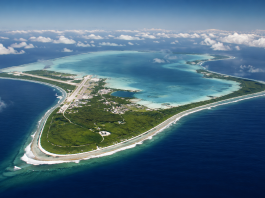
The Maldives has said it has successfully taken control of a maritime area around the Chagos Archipelago that remains under British administration, a declaration that has provoked fierce criticism in Westminster and accusations that the government of Keir Starmer is failing to protect sovereign territory.
Asked about the development, the Foreign, Commonwealth and Development Office told reporters that the sovereignty dispute over the islands is a bilateral matter between the United Kingdom and Mauritius, and does not involve the Maldives.
The comment, first reported by Anadolu Agency, was widely derided by opposition figures and defence analysts as limp and evasive, given that the Chagos currently remains legally British territory and hosts a strategically vital military installation. Critics say the wording amounts to little more than diplomatic hand waving at a moment when a third country is openly asserting control in waters London still governs.
There has been no public indication that Starmer’s Labour government has attempted to remove Maldivian coast guard vessels or aerial surveillance systems from the area, nor any sign of urgent diplomatic escalation or maritime enforcement. The absence of visible action has fuelled claims that ministers are allowing British authority to erode without resistance.
Maldivian President Mohamed Muizzu announced last week that his administration would re engage on the Chagos issue, withdrawing a letter sent by former president Ibrahim Mohamed Solih to the Mauritian prime minister and pursuing legal avenues to reclaim what Malé says is its rightful maritime zone. His government argues that earlier negotiations cost the Maldives a substantial portion of its southern Exclusive Economic Zone and has pledged a full review to recover the waters.
The renewed push comes despite London’s insistence that only Mauritius is party to sovereignty talks, an insistence critics say conveniently dodges the central problem, that Britain is facing an asserted incursion while declining to confront it directly. They also challenge the premise of treating Mauritius as the sole interlocutor, arguing that the country has never administered the islands and therefore has no historical governing record there, a contention central to the political storm now surrounding the Starmer administration.
In October 2024, Keir Starmer announced plans to transfer sovereignty of the Chagos Archipelago to Mauritius, while keeping the major base on Diego Garcia under joint British and American control. The arrangement has not yet been ratified, meaning the islands currently remain, in legal terms, British territory.
That unresolved status has sharpened questions about why London has not publicly challenged Maldivian activity or invoked longstanding defence arrangements with the United States. In 1966, London and Washington agreed that Chagos would remain under British sovereignty until at least 2036, alongside later assurances that any handover deal would not proceed without American approval. None of those commitments were referenced in the latest Foreign Office remarks, a silence critics describe as extraordinary given the strategic weight of the base.
Some defence commentators have gone further, asking whether the same ministers now limiting their response to Maldivian assertions can credibly be expected to guarantee Diego Garcia’s security for decades to come. Others warn the episode risks becoming a humiliation on the scale of the withdrawal from Bagram Airfield, arguing that early passivity could embolden rivals and weaken Britain’s negotiating position.
Britain has administered the Chagos since 1814. In 1965, a former Labour government forcibly removed more than two thousand islanders to make way for the military facility on Diego Garcia. In 2019, the International Court of Justice ruled that the UK should end its administration of the islands, calling the expulsions unlawful, though the judgment was advisory rather than binding.
Opponents of the current approach argue that Starmer’s handling of the Maldivian move looks less like measured diplomacy and more like strategic feebleness, a failure to defend territory Britain still holds in law, and an invitation for further challenges before the future of one of the country’s most sensitive overseas sites is formally settled.